
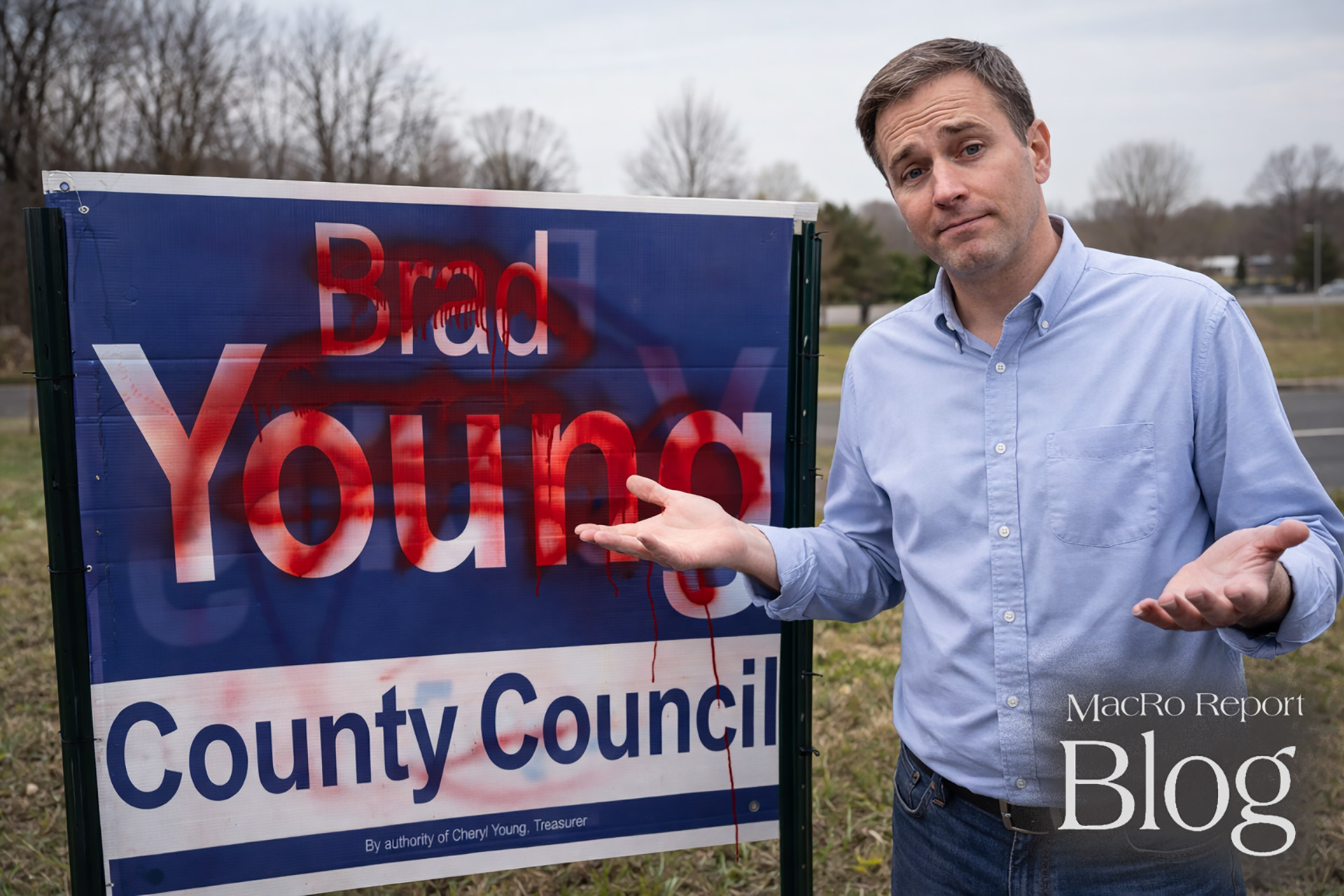
Today’s 17th AI Corner post calls for a return to a more measured, fact-based and civil discussion around data center development in Frederick County, recognizing both legitimate concerns and the importance of thoughtful planning.
In my previous posts, we asked whether data centers are being fairly evaluated and explored what alternative forms of development might look like if they were not built.
Those discussions point to a broader issue that is becoming increasingly visible in Frederick County:
The conversation itself is starting to break down.
Data center development has become one of the most debated issues in the community. Residents have raised concerns about noise, environmental impact, power demand, and land use. These are legitimate topics that deserve thoughtful discussion and careful analysis.
At the same time, the tone of that discussion has, in some cases, escalated beyond constructive debate.
In recent weeks, we have seen examples of rhetoric that portrays data centers as an existential threat to the community—descriptions that suggest they will fundamentally damage quality of life or overwhelm local infrastructure. We have also seen actions that cross a line, including the defacing of campaign signs for local elected officials.
That kind of behavior does not advance the conversation. It undermines it.
A Complex Issue Deserves a Measured Approach
There is no question that data centers are large-scale infrastructure projects. They bring real considerations:
- Electricity demand
- Backup power systems
- Visual impact
- Proximity to homes and schools
Those issues should be examined closely. They should be addressed through engineering, regulation, and planning.
But it is equally important to recognize what data centers are—and what they are not.
They are:
- Highly regulated industrial facilities
- Subject to federal, state, and local environmental standards
- Planned through zoning frameworks such as the CDI-OZ
- Designed with increasing attention to noise, emissions, and energy efficiency
They are not unregulated or uncontrolled development.
The Role of Planning
Frederick County did not arrive at this moment by accident.
The Critical Digital Infrastructure Overlay Zone (CDI-OZ) was created through a deliberate process that included:
- Public hearings
- Legislative review
- Geographic limitations
- Infrastructure-based siting criteria
The result is a framework that attempts to balance growth with control.
In fact, that approach is increasingly being looked at as a model—how to plan for emerging infrastructure needs rather than reacting to them one project at a time.
That does not mean the framework cannot be improved. It can and should be refined as new information becomes available.
But it does mean the conversation should begin with the recognition that planning has already occurred.
The Risk of Escalation
When public debate shifts from concern to confrontation, there is a risk that the outcome is no longer driven by facts or policy, but by pressure.
History shows that reactionary responses to change can sometimes lead to unintended consequences:
- Delayed or abandoned projects
- Lost economic opportunities
- Infrastructure planning setbacks
- Prolonged uncertainty
None of those outcomes serve the community well.
A Call for Civility
Frederick County has a long history of thoughtful civic engagement. That tradition matters, especially when dealing with complex issues like data center development.
It is entirely appropriate for residents to ask questions, raise concerns, and advocate for their views.
But it is equally important that those conversations remain:
- Fact-based
- Respectful
- Focused on solutions rather than escalation
Disagreement is part of the process. Disrespect and intimidation should not be.
Moving Forward
The demand driving data center development is not going away. Artificial intelligence and digital infrastructure are reshaping how communities across the country think about land use, energy, and economic development.
Frederick County is now part of that conversation.
The opportunity—and the challenge—is to continue approaching it the way the CDI-OZ was created:
with structure, deliberation, and a commitment to getting it right.
Because in the end, the quality of the outcome will depend not just on the decisions that are made—but on how the community chooses to make them.
Become a MacRo InsiderWith more than 50 years advising regional landowners, investors, and institutions, Rocky Mackintosh, Broker of MacRo, LTD has firsthand experience supporting nationally recognized hyperscalers with site search and selection services throughout the Mid-Atlantic. Our team has worked at the interface of land planning, infrastructure analysis, and high-value redevelopment—experience that uniquely informs our understanding of projects like Quantum Frederick.