
Today’s 14th of MacRo AI Series post examines the growing concerns surrounding data center development in Frederick County, asking whether the industry is being fairly evaluated—or whether broader infrastructure challenges are being attributed to a single, highly visible use.
Over the past year, data centers have moved from being a largely invisible part of the digital economy to one of the most debated land-use issues in Frederick County—and across the country.
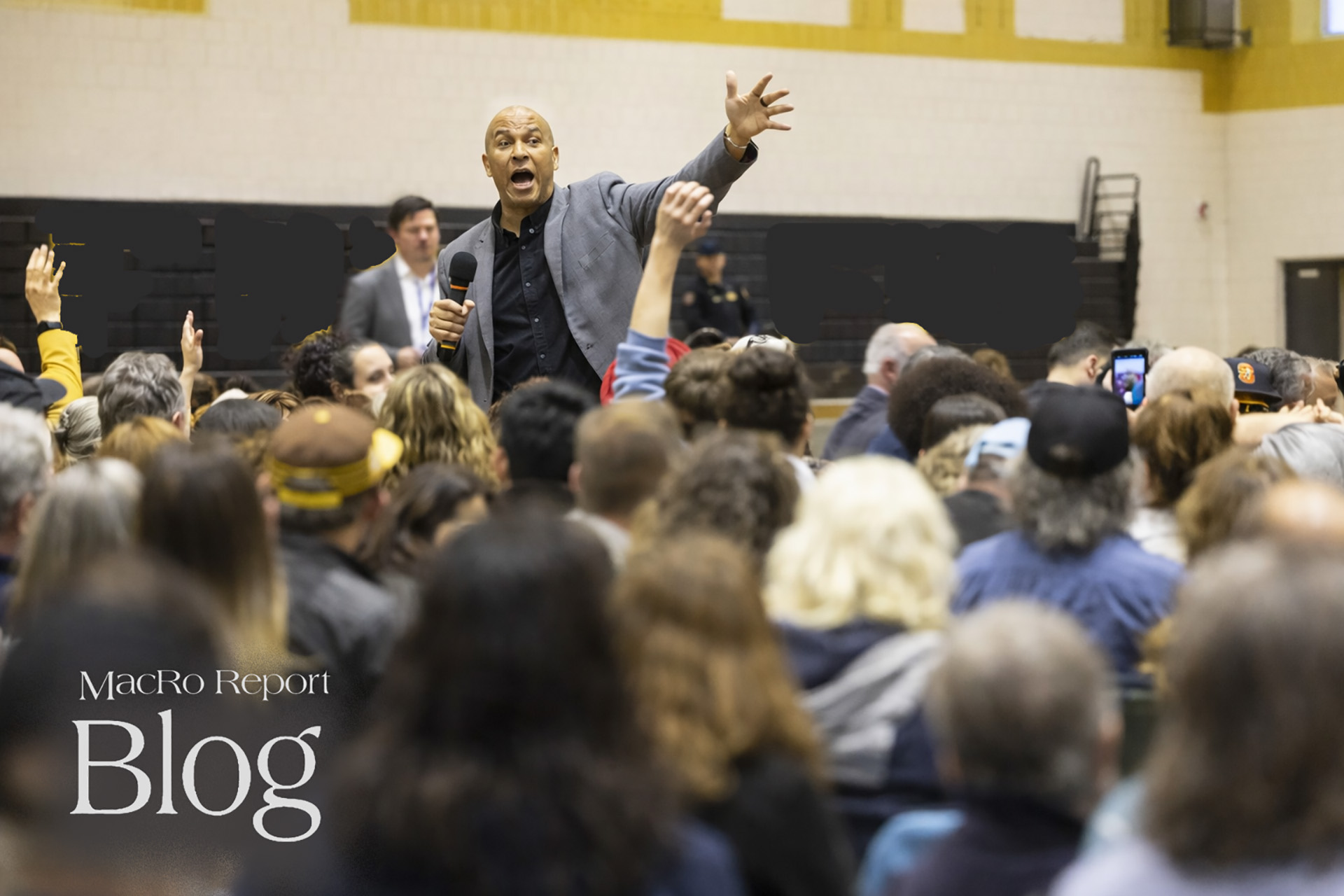
Local headlines, public hearings, social media discussions, and now even efforts to place a referendum on the November ballot all point to the same reality: data centers are no longer just infrastructure—they are a community issue.
Concerns raised by residents are wide-ranging and serious. They include:
- Noise from mechanical equipment and backup generators
- Air emissions from diesel engines
- Visual impact of large-scale industrial buildings
- Water usage for cooling systems
- New transmission lines and substations
- Potential impacts on electricity costs
- Compatibility with farmland preservation and rural character
At the state level, those concerns are now reflected in proposed legislation, including regulatory bills and even discussion of a potential moratorium on new data center development.
Given all of this, it’s fair to ask:
Are data centers creating these problems—or are they becoming the focal point for broader infrastructure challenges?
A New Type of Industrial Development
Part of the tension stems from the fact that data centers do not fit neatly into traditional categories.
They are:
- Large industrial facilities
- But with relatively low traffic
- Minimal long-term employment compared to manufacturing
- High electricity demand
- And increasingly, critical to everyday life
They do not look or behave like warehouses, factories, or office parks. That makes them unfamiliar—and unfamiliar land uses often generate concern.
The Infrastructure Behind the Debate
Many of the issues being raised—power supply, transmission lines, environmental impacts—are not unique to data centers. They are part of a broader challenge:
The United States is entering a period of rapidly increasing electricity demand.
Artificial intelligence, electrification, and digital infrastructure are all contributing to this shift. Data centers are simply the most visible manifestation of that demand.
For example:
- Transmission lines are needed not just for data centers, but for all future electric growth
- Grid upgrades would be required even without local development
- Water and environmental regulations already apply to multiple industries
In many ways, data centers are accelerating conversations that might otherwise have unfolded more slowly.
Perception vs. Scale
Another factor is scale.
A single data center campus can include:
- Dozens of backup generators
- Large buildings across hundreds of acres
- Significant electrical infrastructure
Even when each component meets regulatory standards, the cumulative effect can feel significant—particularly when located near homes, schools, or rural areas.
That perception matters. Community concerns should not be dismissed.
But it also raises an important question:
Are we evaluating individual impacts—or reacting to the scale of the infrastructure itself?
The Economic Dimension
At the same time, data centers bring measurable economic impacts:
- Significant property tax revenue
- Minimal demand on schools and public services
- Construction jobs and related economic activity
- Long-term expansion of the commercial tax base
The policy challenge is not whether impacts exist—they do—but how to balance them against the benefits.
A Moment for Perspective
Frederick County is not alone in this debate. Similar conversations are taking place in Northern Virginia, Arizona, Texas, and other regions experiencing rapid data center growth.
What makes this moment unique is the speed at which it is unfolding.
Artificial intelligence is driving demand for computing infrastructure at a pace that few communities have had time to fully absorb. That has brought complex questions about land use, energy policy, and economic development to the forefront all at once.
So—Are Data Centers Getting a Bad Rap?
The answer may be somewhere in the middle.
The concerns being raised are real and deserve careful consideration. At the same time, many of the issues attributed to data centers reflect broader infrastructure challenges that extend well beyond a single industry.
As Frederick County continues to evaluate its path forward, the conversation may benefit from stepping back and asking not just what impacts data centers bring—but how those impacts compare to the alternatives.
Because in the end, the question is not simply whether data centers should be built.
It is how—and where—they fit into the future of the community.
Become a MacRo InsiderWith more than 50 years advising regional landowners, investors, and institutions, Rocky Mackintosh, Broker of MacRo, LTD has firsthand experience supporting nationally recognized hyperscalers with site search and selection services throughout the Mid-Atlantic. Our team has worked at the interface of land planning, infrastructure analysis, and high-value redevelopment—experience that uniquely informs our understanding of projects like Quantum Frederick.