
Welcome to the MacRo AI Corner: This article begins a series of posts examining the future impact of the Data Center Industry and Artificial Intelligence on real estate and other key sectors in Frederick County, Maryland
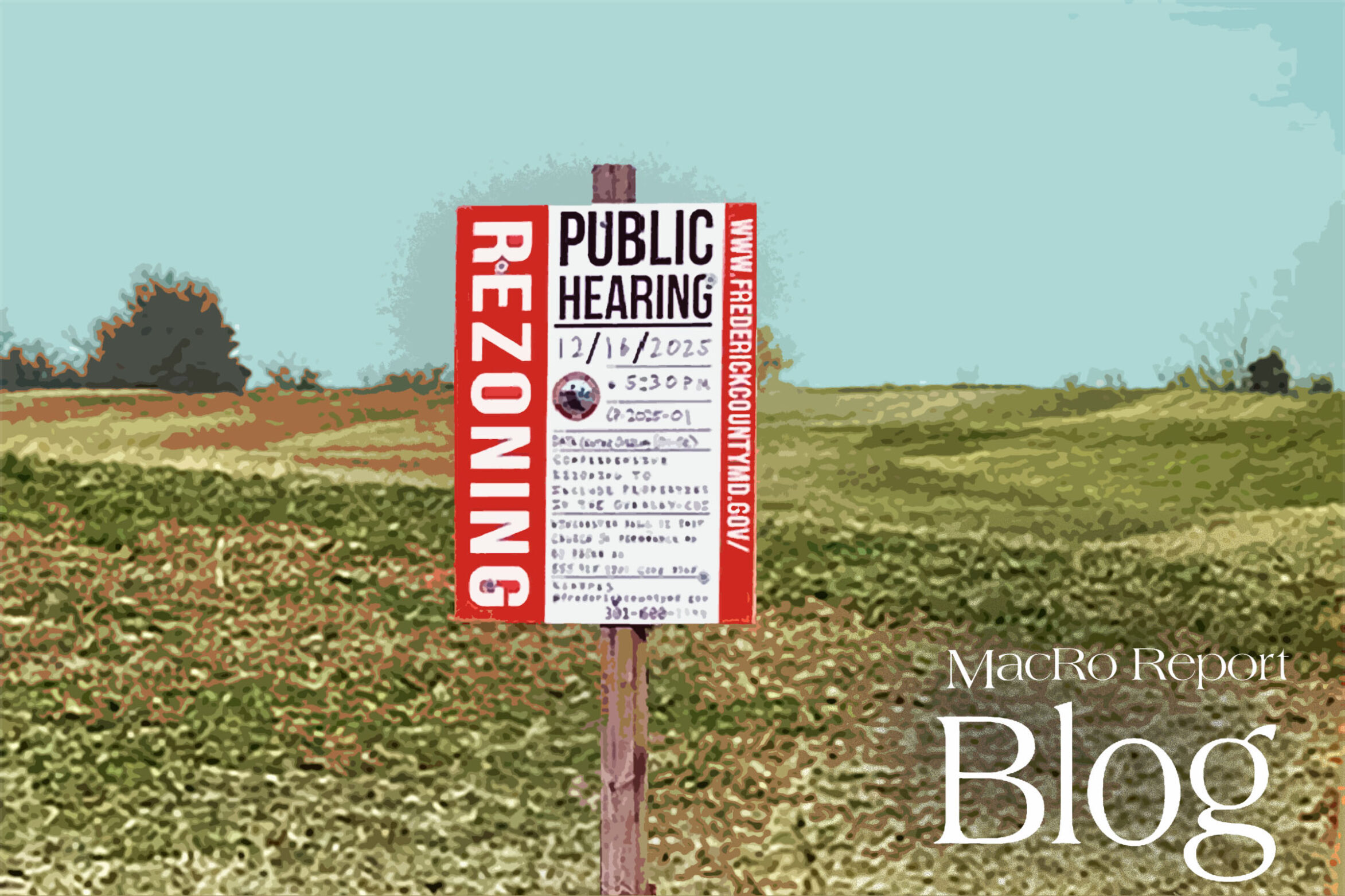
Frederick County is entering a decisive phase in its multi-year effort to regulate where and how large-scale digital infrastructure—primarily data centers—can be developed. Earlier this month, the County Council held an initial workshop on December 2, where members and staff reviewed the proposed Critical Digital Infrastructure Overlay Zone (CDI-OZ) and discussed recommended boundary adjustments. Now, the process moves to its most important stage: a public hearing on December 16 followed by a final vote scheduled for December 23.
The Overlay Zone aims to provide a clear, predictable framework for data-center development by restricting eligibility to properties zoned General Industrial (GI) or Limited Industrial (LI) within the overlay boundaries. The proposal would significantly narrow where data centers can be built, concentrating them in areas already shaped by industrial activity—most notably the former Eastalco site, where the Quantum Frederick data center campus is under construction.
Full background information on the proposal, including details on how to participate in the hearings, is available on Frederick County’s official Data Centers / Critical Digital Infrastructure Overlay Zone page. There you can find the December 16 hearing notice, fact sheets, and supporting materials for the comprehensive plan and zoning map amendments.
The county has also published a Proposed Critical Data Infrastructure (CDI) Overlay Zone map, which visually outlines the areas where data centers could be permitted under the new rules—largely clustered around the Eastalco Community Growth Area, north of Adamstown. This map illustrates the county’s intent to limit data-center development to less than one percent of the county’s landmass and to keep facilities near existing infrastructure and away from sensitive uses like Carroll Manor Elementary School.
Supporters of the CDI-OZ highlight several potential benefits for Frederick County. By mapping where data centers can be located, the county reduces the likelihood of speculative rezoning in rural or agricultural areas. It also allows Frederick County to attract and manage high-value digital infrastructure in a responsible way—supporting economic growth, tax revenue, and job creation while maintaining oversight on issues such as traffic, noise, land use, and utility demand. Balancing the economic benefits with environmental challenges has been carefully considered, as expressed by Frederick County Chamber of Commerce President Rick Weldon in a December 1st op-ed article in the Frederick News Post.
For residents and stakeholders, participation in the remaining steps is straightforward. Anyone wishing to comment may attend the December 16 public hearing at 5:30 p.m. at Winchester Hall, where speakers will have up to six minutes to address the County Council. Written comments may also be submitted through the council’s public comment website, linked from the same county CDI page noted above. After the hearing, the Council is expected to deliberate and take a final vote on December 23, determining whether the Overlay Zone will move forward.
For landowners and institutions evaluating how the proposed overlay may affect their properties or strategic plans, MacRo, LTD offers decades of experience in land and commercial real estate brokerage, valuation, and advisory services. Our team has worked directly with local landowners, property developers and nationally recognized hyperscale operators on site search and selection throughout the Mid-Atlantic, giving us the practical insight needed to help clients navigate Frederick County’s evolving digital infrastructure landscape.
As the county approaches its final decision, the hearings represent more than a zoning discussion. They reflect Frederick County’s broader effort to balance economic opportunity with stewardship of its land, resources, and long-term community character.
Rocky Mackintosh is President of MacRo, Ltd., a Land and Commercial Real Estate firm based in Frederick, Maryland. He has been an active member of the Frederick, Maryland community for over five decades. Over the years, he has served on a number committee and boards for local government, community organizations, education institutions and businesses.